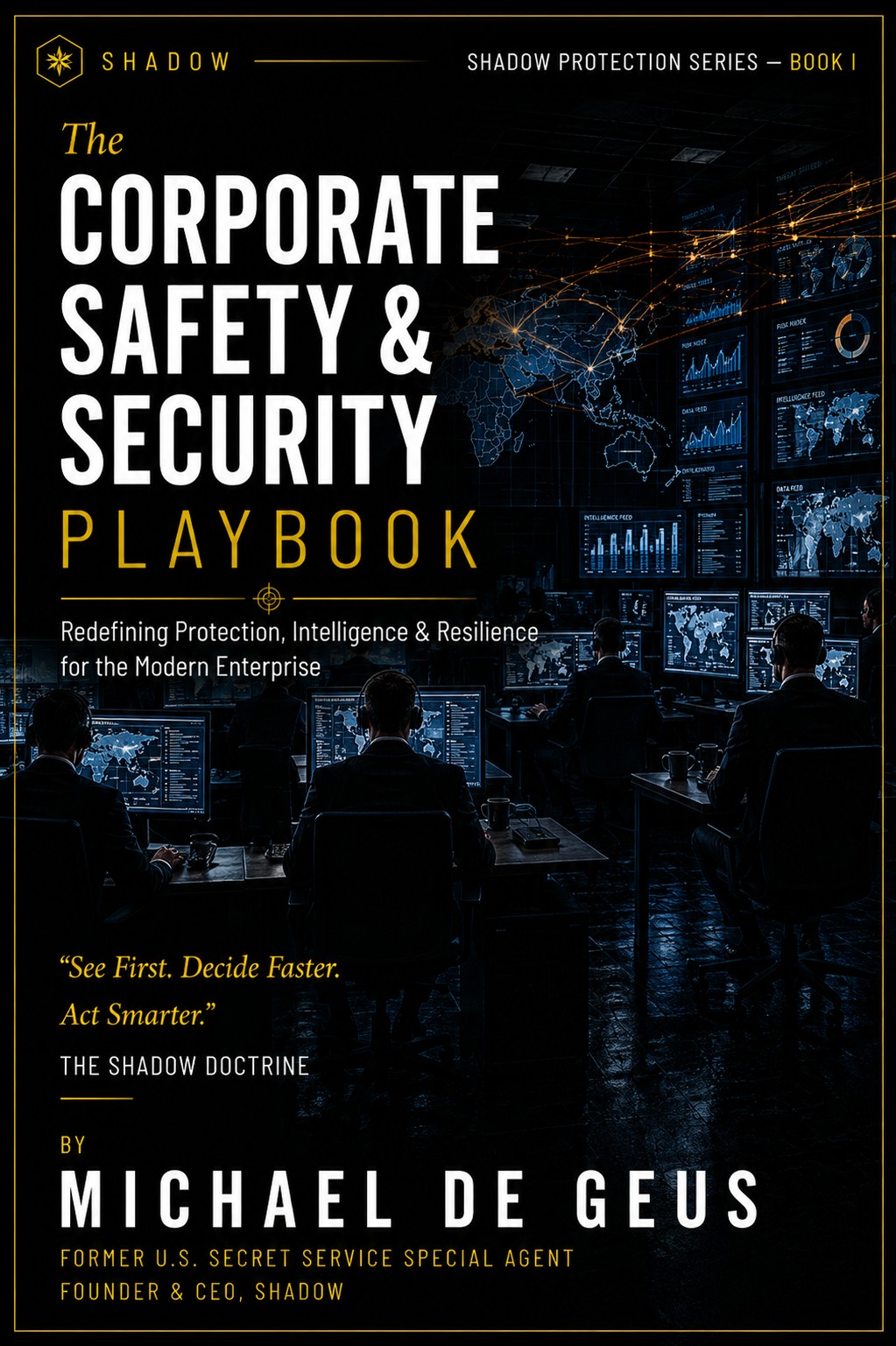
Not a theoretical book written from the outside looking in. Written while running the operations it describes — every framework field-tested the same week it was committed to the page.
"The threat you prepared for is never the one that arrives. The only preparation that transfers is the mindset you build before either one shows up."
Written in the field. Validated under pressure. The Corporate Security Playbook is the definitive operational guide for security professionals, executives, and organizations navigating a threat landscape that changes faster than most training programs can track.
Michael wrote this book while actively running the security operations it describes. Every framework, every assessment protocol, every response architecture — field-tested in real conditions with real stakes before it was committed to the page. The result is a text that reads less like a manual and more like a debrief from someone who was actually there.
"The threat you prepared for is never the one that arrives. The mindset you build is the only preparation that actually transfers."
Most organizations assess threats based on what happened last time. Michael's framework assesses based on what the adversary is capable of next. The difference between reactive and anticipatory security is this distinction — and it's the difference that matters.
A protocol that doesn't survive first contact with a real incident isn't a protocol — it's a document. Every framework in the Playbook was designed to function under the conditions it will actually face: incomplete information, compressed timelines, and personnel who are operating under stress.
Crisis response is not improvisation — it's rehearsed decision-making. The Playbook's response architecture defines the decision trees, communication protocols, and authority structures that allow organizations to act decisively when speed is the only competitive advantage available.
Security is not a department. It's a capability distributed across every function of an organization. The fourth pillar addresses how to build security-aware culture without creating security-paralyzed culture — the distinction most programs get exactly wrong.